Your garbage disposal makes kitchen cleanup easier, but it can also become a major source of plumbing problems if you use it incorrectly. You may think that disposals can handle anything, but that mistake often leads to clogs, odors, and costly repairs. Understanding what can go in garbage disposals and what not to put in them helps protect your plumbing and keeps your kitchen running smoothly.
Disposals Aren’t Trash Cans: Why the Wrong Items Cause Clogs Fast
A garbage disposal grinds small amounts of soft food waste but isn’t a catch-all for kitchen scraps. When you put the wrong food materials into your system, they can stick to pipes and block water flow. Grease and fibrous food items can quickly accumulate and form stubborn clogs. Over time, these materials restrict water movement and lead to slow drains or complete blockages.
When you understand the limits of your disposal, you can prevent problems before they start. Practicing good kitchen sink clog prevention habits keeps your disposal working efficiently and reduces the need for frequent drain cleaning services in Springfield, MO.
Do’s for Everyday Use
Knowing what can go in your garbage disposal and using it properly can extend its lifespan and help avoid unnecessary repairs. Simple habits make a big difference in performance and reliability.
Run Cold Water
Always run cold water when using your disposal. Cold water helps solidify grease and fats so that they can move through the system instead of sticking to pipes. You should start the water before turning on the disposal and continue running it for several seconds after use. This helps flush particles through the drain and prevents buildup.
Feed Small Amounts
Avoid overloading your disposal with large amounts of food at once. Feeding small amounts allows the blades to grind waste more effectively and prevents jams. Large loads can overwhelm your system and create incomplete grinding. This increases the chance of clogs forming and reduces overall performance.
Keep It Clean
Regular cleaning helps prevent odors and buildup inside your disposal. Food particles can accumulate and create unpleasant smells. As part of your cleaning routine, you can grind ice cubes and citrus peels occasionally. This helps remove any residue and keeps the unit smelling fresh.
Use Strainers
Using a sink strainer when not using your unit helps catch larger food scraps before they reach the disposal. This reduces the amount of material entering the system and prevents unnecessary strain. Strainers also help prevent accidental items from falling into the disposal. This simple tool supports kitchen sink clog prevention and keeps your plumbing in better condition.
Don’ts: What Never Goes in the Disposal
Understanding what not to put in garbage disposals is just as important as knowing how to use them properly. Certain items can cause immediate damage or long-term problems with the system.
Grease and Oil
Never pour grease or oil down your disposal. These substances may seem harmless when liquid, but they solidify as they cool. Once they harden, they stick to pipes and create blockages. Over time, this buildup can result in severe clogs that require professional drain cleaning in Springfield, MO.
Bones
Disposals aren’t designed to handle hard materials like bones. These items can damage blades and strain the motor. Even small bones can cause jams or reduce the efficiency of your disposal. It’s best to dispose of them in the trash instead.
Fibrous Peels
Fibrous foods, such as celery, corn husks, and potato peels, will wrap around the blades of your disposal and create clogs. These materials don’t break down very well and can interfere with normal operation. Avoid placing these items in your disposal to prevent jams and reduce wear on the system.
Coffee Grounds
Coffee grounds may seem harmless, but they can accumulate in pipes and form dense clogs. They often stick together, creating a sludge-like buildup. This buildup restricts water flow and will lead to slow drains or complete blockages.
Pasta and Rice
Pasta and rice expand when exposed to water. Once they enter your disposal, they can continue to swell and create clogs. These foods can quickly block pipes and cause drainage issues. It is best to dispose of them in the trash.
Eggshells
Eggshells can create unexpected problems in your disposal. The membrane inside the shell can wrap around blades, while the shell fragments contribute to the buildup. Avoid placing eggshells in your disposal to maintain proper function.
If Your Disposal Is Clogged or Humming
Even with proper use, your disposal may occasionally get clogged or start humming. Knowing what to do when your disposal is clogged can help you address minor problems safely and prevent further damage to the unit.
Reset Button
Most garbage disposals have a reset button located on the bottom of the unit. If your disposal stops working, pressing this button can reset the motor if it has overheated or tripped due to overload. However, you should avoid repeatedly pressing the button if your disposal keeps shutting itself off. In this case, it is best to call a professional to inspect your unit for electrical issues.
Unplug for Safety
Before attempting any troubleshooting, unplug the disposal or turn off the power at the breaker. This prevents accidental activation and ensures your safety. Working on a powered unit can be dangerous, so always take this precaution first.
Use an Allen Key
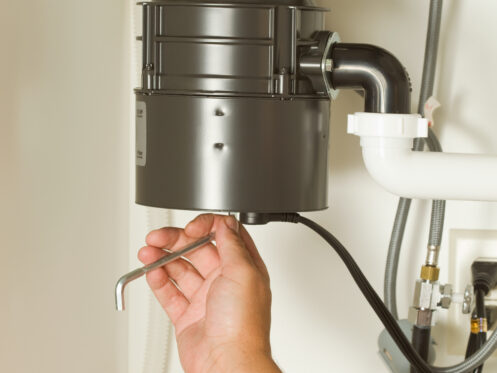
Many disposals include a manual turning feature that uses an Allen key. Inserting the key into the bottom of the unit allows you to rotate the blades to clear jams.
When to Stop DIY
If your disposal continues to hum without grinding or if clogs persist, it is time to stop DIY attempts. Continuing to force the system can cause further damage. Our team can provide professional service to help you identify the cause of the clog and provide a safe, effective solution.
When to Call a Plumber
Some disposal issues require professional attention. Recognizing these situations helps you avoid worsening the problem.
Standing Water
If water remains in your sink and doesn’t drain, a blockage may exist beyond the disposal. This often requires professional tools to clear.
Recurring Clogs
Frequent garbage disposal clogs can indicate an issue with the blades or other components. One of our plumbers can diagnose the cause and recommend appropriate solutions.
Leaks
Leaks around your disposal or under the sink can lead to water damage. Addressing leaks promptly helps protect your home from further issues.
Bad Odors
Persistent odors can indicate that you have a buildup or trapped debris within your disposal. Scheduling a professional cleaning can remove the debris from hidden areas and restore freshness.
Slow Drains Beyond the Disposal
If multiple drains in your home slow down, the issue may not be in your kitchen. This can be a sign of a larger problem within your plumbing system. In these cases, professional drain cleaning in Springfield, MO can help restore proper flow and prevent future issues.
Next Steps
Using your garbage disposal correctly can prevent clogs and protect your plumbing system, but knowing when to call a professional is just as important. If you are dealing with ongoing issues or want to improve kitchen sink clog prevention, scheduling expert drain cleaning in Springfield, MO, can help keep your system running smoothly and avoid costly repairs. All Klear is a locally owned plumbing company offering comprehensive, prompt, and reliable solutions. Contact us today to get started.