
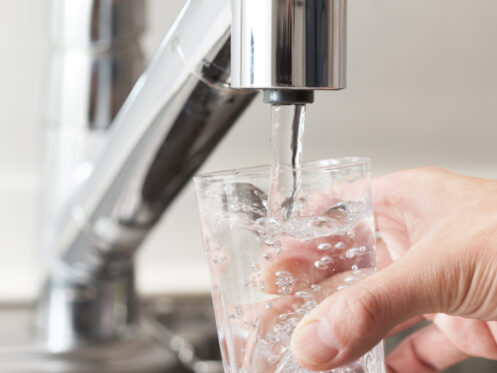
You turn on the faucet for a glass of water, but soon notice that something is off. Instead of a clean, refreshing taste, you get a metallic tang, an earthy odor, or a smell like rotten eggs. For Springfield homeowners, strange tastes and smells can come from various sources, ranging from the municipal supply to the pipes inside your home.
Once you’re aware of the potential causes behind these unpleasant changes, you can find a solution. Some issues are merely aesthetic, while others could point to plumbing problems or contaminants. This guide covers common causes, how to narrow down the source, and treatment options that can improve your water’s taste and quality.
Common Tap Water Tastes, Odors, and Causes
The specific taste or smell of your water provides valuable clues about what might be causing the problem. Different contaminants and chemical compounds produce distinct sensory profiles. Here are some of the most frequent complaints and their likely origins.
Metallic Taste
A metallic flavor may indicate metals such as iron, copper, or manganese. These can enter water from the source or corroded plumbing. High concentrations can stain fixtures and laundry and give water an unpleasant taste.
Chlorine or Chemical Smell
A swimming-pool smell is usually due to chlorine, which municipalities add to disinfect public water supplies. While effective at killing bacteria, chlorine can leave an unpleasant taste.
Rotten Egg or Sulfur Smell
A rotten-egg smell is typically due to hydrogen sulfide gas, which can be from certain bacteria in wells or water heaters. If the odor comes from the drain rather than the water, bacteria or buildup in the drain may be responsible.
Earthy or Musty Odor
An earthy, moldy, or fishy smell can point to organic compounds from the water source or bacteria growing within your plumbing system.
Salty Taste
A salty taste can indicate a high concentration of chloride ions or total dissolved solids (TDS). This can be due to industrial runoff or, in some areas, road salt seeping into the groundwater supply. High TDS levels can affect the water’s overall quality and taste.
How to Tell Whether the Problem Affects One Fixture or the Whole House
You can do some simple detective work to pinpoint the source, which can help determine the right solution. First, check whether the issue affects your hot or cold water. Run each for a couple of minutes and compare the taste and smell. If the problem is only with your hot water, it could point to an issue with your water heater, where sediment or bacteria can accumulate.
Next, compare different faucets. Does the water from your kitchen sink taste bad, but the bathroom sink seems fine? If the problem is just in a single faucet, the issue might be a dirty aerator or a problem in the plumbing line leading to that specific fixture.
If the odd taste or smell is present in both hot and cold water at every faucet, the problem may be coming from the incoming water supply, main water line, or plumbing throughout the home.
When Water Testing Is the Next Step
While a taste test can provide clues, water testing is the best way to identify specific contaminants, mineral concentrations, and pH levels. You should consider water testing if you move into a new home, if you rely on a private well, or if there’s a sudden and significant change in your water’s taste, smell, or appearance. We also recommend professional testing for households with infants, elderly individuals, or family members with compromised immune systems, as they can be more vulnerable to certain contaminants.
A professional analysis takes the guesswork out of the equation. Once you have the results, you can make an informed decision about the most effective treatment options for your specific water issues.
Which Treatment Options May Help?
Once you know what’s causing your water quality problems, you can explore various solutions to fix it. Modern water treatment services offer targeted ways to remove impurities and improve the taste and safety of your tap water.
Water Filtration
Water filtration systems target specific contaminants. Activated carbon filters can reduce chlorine, sediment, and volatile organic compounds (VOCs), improving taste and odor. For more comprehensive treatment, reverse osmosis (RO) systems can reduce the amount of dissolved solids as well as certain metals and contaminants. We install these systems at a single point of use or throughout the home.
UV Water Treatment
If water testing reveals the presence of bacteria, viruses, or other microorganisms, a UV water treatment system is an effective solution. This technology uses ultraviolet light to damage the DNA of microorganisms, preventing them from reproducing and helping disinfect the water. UV treatment is a chemical-free way to disinfect your water without altering its taste or smell.
Water Softeners
If your water has a high mineral content (hard water), it can leave a chalky or metallic taste. A whole-home water filtration system can help address water quality concerns, while a water softener specifically targets hardness minerals such as calcium and magnesium through ion exchange. In addition to improving the taste of your water, a softener also prevents scale buildup in your pipes and appliances, extending their lifespan and improving their efficiency.
Explore Tap Water Solutions With All Klear
You shouldn’t have to tolerate tap water that tastes or smells unpleasant. At All Klear, we believe every Springfield homeowner deserves access to clean, great-tasting water. Since 2006, our team has worked hard to provide reliable plumbing services and water quality solutions.
We can help you diagnose the root cause of your water issues with professional testing and recommend the ideal treatment system for your home and budget. From simple filters to comprehensive purification systems, we have the expertise to improve home water quality. In addition, we offer emergency service when unexpected plumbing or water quality problems need prompt attention.
If you’re tired of unpleasant tastes and odors in your water, contact All Klear for professional water treatment services in Springfield and the surrounding areas. We offer free, in-person consultations and quotes with no sales pressure.
Tap Water Tastes Bad FAQs
Not necessarily. Many taste and odor issues, such as a slight chlorine smell from municipal treatment or a mineral taste from hard water, are aesthetic and don’t pose a health risk. However, since some tastes and odors can signal the presence of harmful bacteria or chemical contaminants, it’s always best to investigate the cause rather than assume it’s safe.
If only your hot water has a bad taste or smell, the issue is almost certainly your water heater. Sediment buildup at the bottom of the tank can create a breeding ground for bacteria. Another common cause is a deteriorating anode rod, which can react with minerals in the water to produce hydrogen sulfide gas, causing a rotten egg smell.
Hard water, which has a high concentration of dissolved minerals like calcium and magnesium, often has a distinct taste. Some people describe it as slightly chalky, bitter, or even salty. While it’s safe to drink, many homeowners prefer the cleaner, more neutral taste of softened water.
A sulfur or “rotten egg” taste and smell is likely due to hydrogen sulfide gas. This gas is from sulfur-reducing bacteria that can thrive in environments with low oxygen, such as deep wells, plumbing systems, and water heaters. Though the smell is very unpleasant, hydrogen sulfide in water at typical levels is not a health concern.